Designer Jewelry: Key Merits, Main Types, and How to Choose
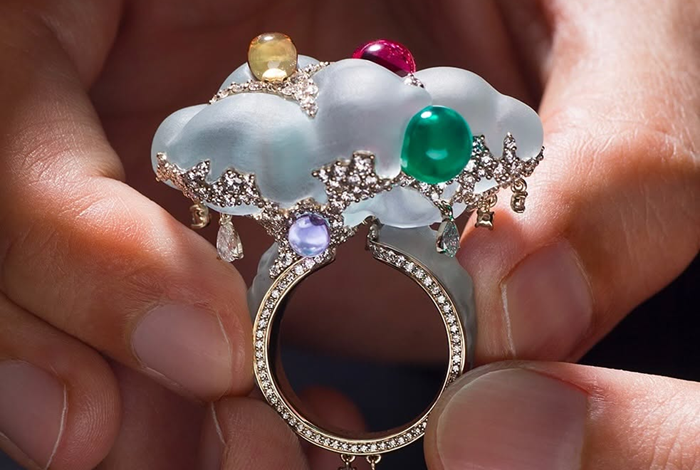
Designer jewelry pieces are more than mere accessories; they are original creations that blend innovative concepts, expert craftsmanship, and carefully selected materials.
They are prized for their uniqueness, distinctive style, and ability to highlight the wearer’s individuality, as well as for their meticulous detailing and thoughtful use of symbolic forms.
Key categories include rings, earrings, bracelets, pendants, and necklaces, spanning styles from minimalism and geometric designs to vintage motifs and artistic pieces featuring unusual insets. When choosing a piece, it is important to consider not only its appearance but also its comfort, intended use, and how well it complements a casual or evening outfit; more information about jewelry can be found on the https://luxebrokersgroup.com/sell/designer-jewelry/.
What distinguishes artisan jewelry from mass-market collections: features to check before buying
Artisan jewelry differs from mass-market items not only in appearance but also in the creative process: the maker carefully considers the form, structure, and fit on the body, rather than simply replicating a standard model designed for mass appeal. Consequently, these pieces often exhibit a distinct character—evident in their proportions, the fluidity of their lines, the combination of materials, and how the jewelry moves and interacts with the wearer.
It is important for buyers to distinguish between genuine handcrafted or limited-edition designs and “pseudo-designer” products where uniqueness is claimed only in the description. Below are features you can check before and during inspection to evaluate the piece’s origin, quality, and the authenticity of the offer.
Verifiable features of artisan jewelry
- Documentation and provenance. Clarify exactly who the creator is (the artisan’s name or brand), where the piece was made, and whether there is supporting documentation—such as a product certificate, tag, receipt, or a description of materials and stone settings. For artisan pieces, the technique (casting, forging, filigree, enamel, micromosaic) and batch details are often specified.
- Production run and reproducibility. Ask directly: is this a one-of-a-kind piece, a limited edition, or a standard model? Artisan pieces usually have limited production runs, and reproductions may differ in details (texture patterns, stone setting, or finishing nuances).
- Construction and “engineering.” Check the clasps, hinges, solder joints, and stone settings; they should be logically designed and secure. Mass-produced collections often feature simplified assemblies prioritized for speed, whereas artisan pieces offer more thoughtful mechanics, comfort, and ease of repair.
- Signs of handcraftsmanship—without masking defects. Slight textural variations or micro-asymmetry may be acceptable if artistically justified. However, chips, uneven edges, loose settings, scratches, or misaligned stones are not signs of artisan craftsmanship but rather of a defective product.
- Materials and labeling accuracy. Check for hallmarks on precious metals and verify the stated metal and plating. If the item is gold-plated or rhodium-plated silver, ask about the plating thickness and care instructions; a reputable artisan will provide this information clearly, without “marketing fluff.”
- Gemstones and settings. Inspect the setting: the prongs should be symmetrical and hold the stone firmly, with no gaps or rough edges that could snag. Ask for information regarding the origin and characteristics of the stones (natural vs. synthetic, any treatments applied), as well as instructions on how to care for and clean the piece.
- Finishing. Evaluate the polishing, matte, or satin finishes: transitions should be neat, free of blurred edges or blemishes. Artisan pieces often feature more complex and expressive finishes, yet the execution remains clean and controlled.
- Customization options. A hallmark of a genuine artisan approach is the willingness to adapt the piece—such as adjusting ring size, chain length, or clasp type, selecting a different stone, or adding an engraving. Mass-produced collections typically offer only standard specifications.
What to do when buying: a quick checklist
- Ask the seller to identify the artisan and the technique used, then compare their answers with the description on the tag or product card.
- Inquire about the production run and ask what specifically distinguishes this particular piece from others.
- Examine the construction (clasp, joints, soldering) and handle the piece to check for any looseness, snagging, or rough edges that might catch on skin or clothing.
- Check the markings (hallmark, tag, material composition, stone details) and keep your proof of purchase.
- Assess the quality of the stone setting and check for micro-cracks, chips, or misalignments.
- Ask about care and warranty: artisan workshops are more likely to provide clear maintenance guidelines and offer servicing for their pieces.
If most of these points are backed by facts—such as documentation, high-quality craftsmanship, and transparent answers from the seller—there is a significantly higher probability that you are looking at a genuine artisan piece. However, when uniqueness rests solely on labels like “exclusive” without any specifics, it is best to treat the purchase as an ordinary mass-market model and evaluate it strictly on the basis of quality and price.